Eye Drop Days Supply Calculator
Calculate eye drop day supply instantly using bottle size, prescribed drops, and dosing frequency. Designed for pharmacists, pharmacy technicians, students, and insurance billing.
👁️ Days Supply · Eye Drops
📦 Bottle Package Size mL
💧 Drops per mL
📋 Directions to Use
📌 Please Note:
Default drops: 20 drops/mL (solution) · 16 drops/mL (suspension)
(L/R) – Left or Right Eye
⚡ Instant Results
📐 Step‑by‑step calculation
What Is an Eye Drop Days Supply Calculator?
An eye drop days supply calculator is a simple tool that helps pharmacists figure out how many days a bottle of eye drops will last for a patient. It uses the number of drops in the bottle, how many drops are used per eye, and how often the medicine is used each day. This makes it easier to give the right supply amount when filling a prescription.
Why Accurate Day Supply Matters
Getting the day supply right is very important for several reasons. First, it affects insurance billing. If the days are wrong, the claim may not go through. Pharmacy benefit managers (PBMs) check these numbers closely, and Medicare Part D has strict rules too. If the day supply is off, it can cause refill rejections, meaning the patient can’t get their medicine on time. Also, pharmacies face audits regularly. If the day supply doesn’t match the records, the pharmacy could lose money or face penalties. So, accuracy helps everyone, patients, pharmacies, and insurers.
Eye Drop Days Supply Formula
Days Supply = Total Drops in Bottle ÷ Drops Used Per Day
It looks simple, but let’s break it down so it actually makes sense.
Total Drops in Bottle: This is the number of drops the manufacturer says the bottle holds. Most standard eye drop bottles have about 150 to 300 drops. You can usually find this number on the box or in the product info.
Drops Used Per Day: This is the total number of drops the patient puts in their eyes each day. To get this, you multiply the number of drops per eye by how many times a day they use it, and then by how many eyes are being treated.
Once you have both numbers, you just divide. That gives you the total days the bottle should last. Keep in mind, this is an estimate. Not every drop that comes out of the bottle actually makes it into the eye, so real life can be a little different. But for insurance and pharmacy records, this formula is the standard way to go.
How to Calculate Eye Drop Day Supply
Step-by-Step Example
Sometimes the formula makes more sense when you see it with real numbers. So let’s walk through an example together.
Available
- Bottle Size: 5ml
- Drops per ml: 20
- Total drops in bottle: 5 x 20 = 100 drops
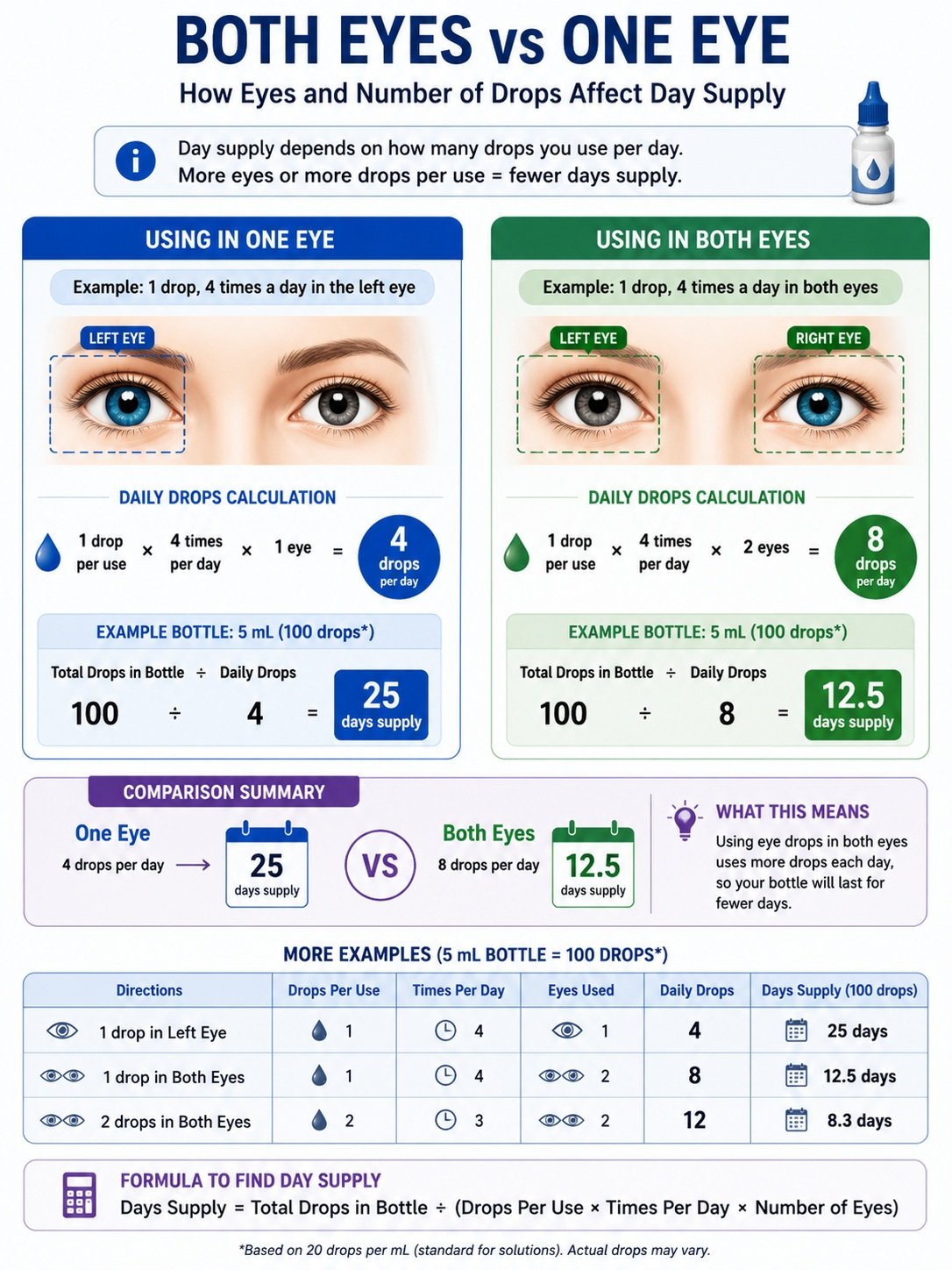
Now let’s look at the prescription. The prescription says to use 1 drop in each eye, twice a day. That means 2 drops per dose, and the patient does that 2 times daily. So altogether, that is 4 drops used every day.
Now we just divide. Take the total drops in the bottle (100) and divide by the drops used per day (4). That gives you 25. So this bottle will last exactly 25 days. Simple, right?
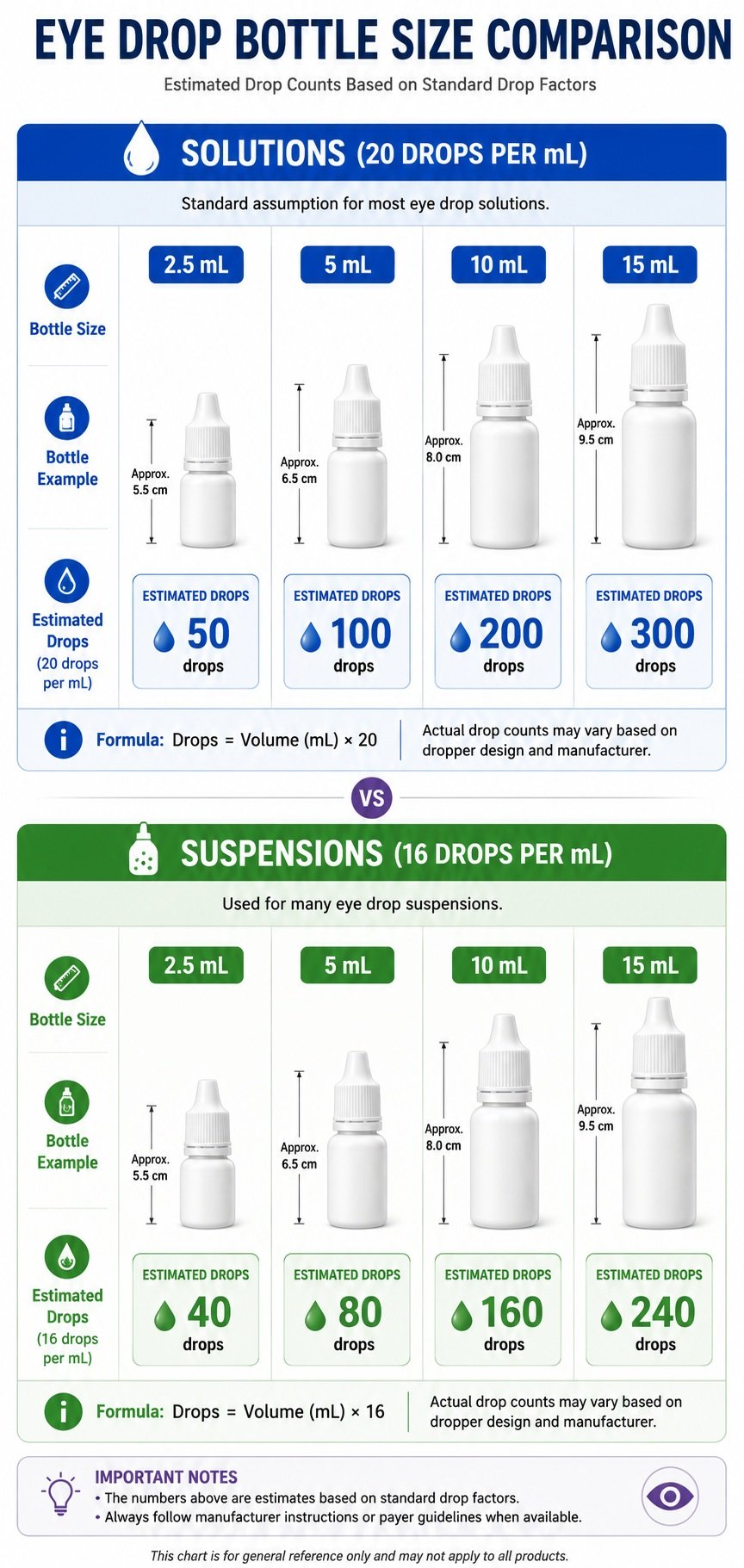
Eye Drop Bottle Size Chart
Not all eye drop bottles are the same. They come in different sizes, and the number of drops can vary quite a bit. This quick chart gives you a general idea of what to expect. Keep in mind, these are estimates actual drop counts can differ slightly between brands.
| Bottle Size | Estimated Drops | Common Uses |
| 2.5 mL | 50 drops | Glaucoma medications |
| 5 mL | 100 drops | Antibiotics, allergy drops |
| 10 mL | 200 drops | Lubricants, artificial tears |
| 15 mL | 300 drops | Steroids, heavy-duty dry eye relief |
Eye Drop Day Supply Billing Tips
Medicare & PBM Guidelines
When billing for eye drops, insurance companies and pharmacy benefit managers (PBMs) have specific rules you need to follow. Getting these details right can save you from rejected claims and costly audits. Here are some key points to keep in mind:
Drops per mL matters
Most standard drops are around 20 drops/mL, but some products, especially suspensions, can be closer to 15 drops/mL.
Suspensions vs. solutions
Suspensions (like some steroid drops) tend to have larger drop sizes, so you get fewer drops per bottle. Solutions are usually more consistent.
Multi-dose bottles
These are the most common. Just remember that patients often waste drops, especially with thick liquids or tricky bottle designs.
Wastage is real
Not every drop makes it into the eye. Some runs down the cheek or misses entirely. Medicare and PBMs expect you to account for some loss.
Check the package insert
The manufacturer often lists the exact number of drops per mL right on the insert. When in doubt, trust that number over general estimates. It’s your best defense during an audit.
Common Eye Drop Calculation Mistakes
Even experienced pharmacists can slip up sometimes. Here is a quick checklist of the most common errors to watch out for. Double-check your work and avoid these pitfalls:
- Forgetting both eyes: If the prescription says “both eyes,” remember to double the drops per dose. One drop in each eye means 2 drops total per use, not 1.
- Wrong drops/mL: Not every bottle gives you 20 drops per mL. Some give 15, others give 25. Always verify.
- Incorrect frequency: Make sure you are using the right number of times per day. Twice daily is not the same as every 12 hours.
- Ignoring wastage: Patients lose drops to blinking, running down the face, or missing the eye entirely. Factor in some loss.
- Using bottle volume only: Don’t just look at the mL size. You need to know drops per mL to get an accurate count.
- Assuming every bottle has same number of drops: Different brands, different shapes, different tips-they all affect drop size and count. Never assume.
Frequently Asked Questions
How many drops are in a 5 mL eye drop bottle?
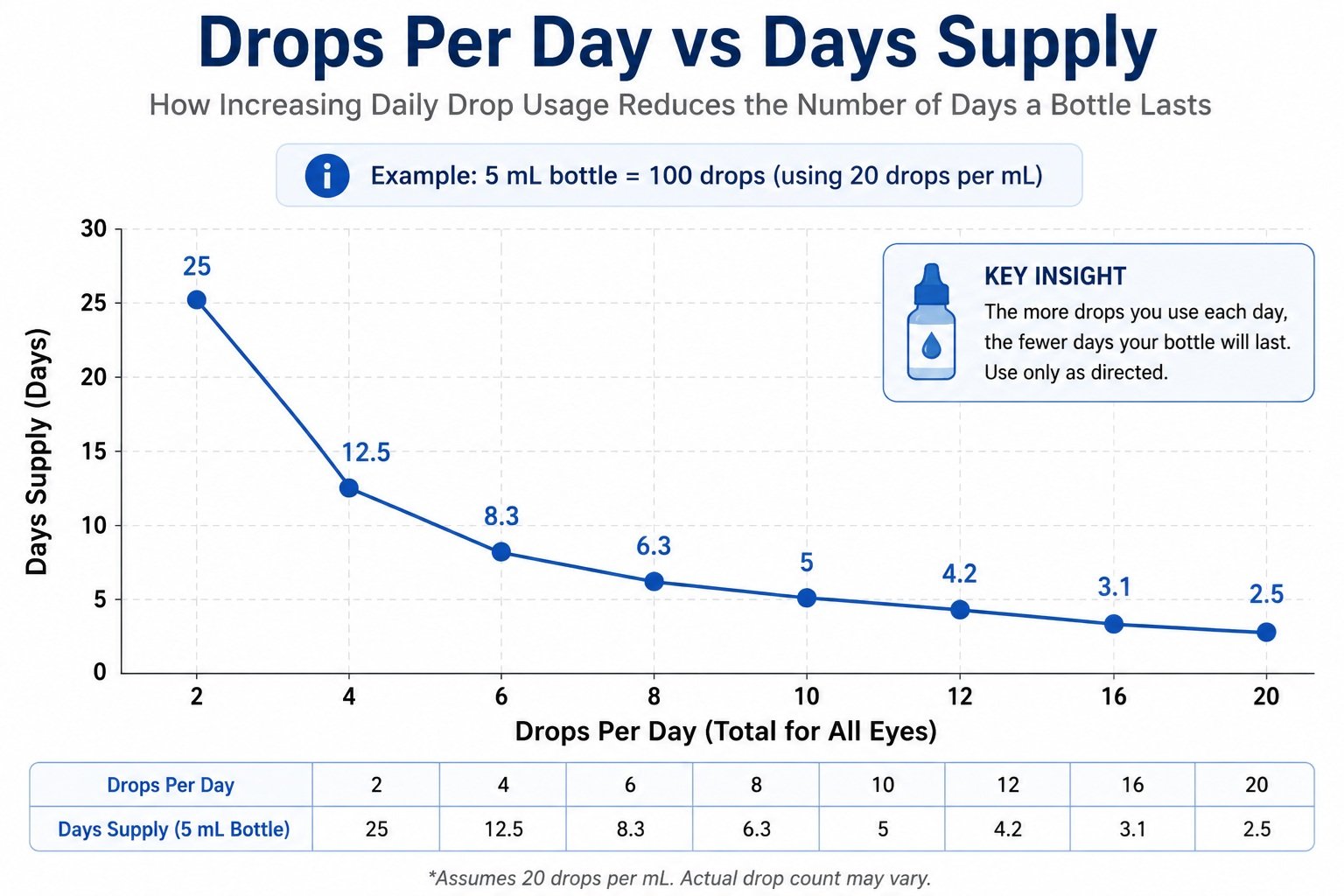
A standard 5 mL eye drop bottle typically contains about 100 drops when using the common assumption of 20 drops per mL. However, the actual number of drops may vary depending on the manufacturer, bottle design, dropper tip, and whether the medication is a solution or suspension.
How do pharmacies calculate eye drop day supply?
Pharmacies calculate eye drop day supply by dividing the total number of drops in the bottle by the total number of drops the patient uses each day. The formula is: Days Supply = Total Drops in Bottle ÷ Drops Used Per Day. This method helps ensure accurate insurance billing and prescription refill timing.
What is the standard number of drops per mL?
For most ophthalmic solutions, the standard assumption is 20 drops per mL. Some eye drop suspensions or specialty products may use a different drop count based on manufacturer recommendations or pharmacy benefit manager (PBM) billing guidelines.
Why do suspensions use different drop counts?
Eye drop suspensions may produce larger or smaller drops because of their thicker consistency and formulation. As a result, some suspensions contain fewer drops per milliliter than standard solutions. Pharmacies may follow manufacturer instructions or payer-specific guidelines when calculating the correct day supply.
Does Medicare require 15 or 20 drops per mL?
Many Medicare Part D plans and pharmacy benefit managers commonly use 20 drops per mL as the standard assumption for ophthalmic solutions. However, certain medications or payer policies may specify 15 drops per mL or another value. Pharmacists should always follow the specific billing guidance provided by the insurance plan or pharmacy benefit manager.
References
- National Eye Institute (NEI). How to Put in Eye Drops
- MedlinePlus (U.S. National Library of Medicine). How to Use Eyedrops
- American Academy of Ophthalmology (EyeWiki). Comprehensive Drop Guide
- American Academy of Ophthalmology (EyeWiki). Glaucoma and Compliance with Therapy: Strategies for and Barriers to Success