Fraction Calculator – Add, Subtract, Multiply, Divide & Simplify Fractions
⚡ Fraction Calculator
🧾 Instant Result
📋 Step‑by‑step calculation
How to Use the Fraction Calculator
This fraction calculator is a powerful, real-time tool that handles 12 different fraction operations. Select an operation from the dropdown or type in your numbers, and the results appear immediately along with a detailed step-by-step breakdown of the calculation process.Add Fractions
The Add Fractions operation combines two fractions by finding a common denominator, then adding the numerators. The result is automatically simplified to its lowest terms and displayed as both an improper fraction and a mixed number. This is the most fundamental fraction operation, essential for understanding how fractional quantities combine.Formula Used
a b + c d = (a × d) + (c × b) (b × d)
Example
2 3 + 3 4 = (2 × 4) + (3 × 3) (3 × 4) = 17 12 = 1 5 12
Step-by-step breakdown:
- Find common denominator: Multiply the denominators (b × d)
- Adjust numerators: Multiply each numerator by the other fraction’s denominator
- Add numerators: Sum the adjusted numerators
- Simplify:
- Reduce the fraction to lowest terms using GCD (also called GCF – Greatest Common Factor) is the largest number that divides evenly into both the numerator and the denominator.
Subtract Fractions
The Subtract Fractions operation finds the difference between two fractions by finding a common denominator, then subtracting the second numerator from the first. The result is automatically simplified to its lowest terms and displayed as both an improper fraction and a mixed number for complete clarity.Formula Used
a b − c d = (a × d) − (c × b) (b × d)
Example
5 6 − 1 3 = (5 × 3) − (1 × 6) (6 × 3) = 15 − 6 18 = 9 18 = 1 2
Step-by-step breakdown:
- Find common denominator: Multiply the denominators (b × d)
- Adjust numerators: Multiply each numerator by the other fraction’s denominator
- Add numerators: Sum the adjusted numerators
- Simplify: Reduce the fraction to lowest terms using GCD (also called GCF – Greatest Common Factor) is the largest number that divides evenly into both the numerator and the denominator.
Multiply Fractions
The Multiply Fractions operation finds the product of two fractions by multiplying the numerators together and the denominators together. Unlike addition or subtraction, you don’t need a common denominator. The result is automatically simplified to its lowest terms and displayed as both an improper fraction and a mixed number.Formula Used
a b × c d = (a × c) (b × d)
Example With Numbers:
2 5 × 3 7 = (2 × 3) (5 × 7) = 6 35
Example With Mixed Numbers:
1 1 2 × 2 1 3 = 3 2 × 7 3 = 21 6 = 7 2 = 3 1 2
Step-by-step breakdown:
- Convert mixed numbers to improper fractions (if needed)
- Multiply numerators: a × c
- Multiply denominators: b × d
- Simplify: Reduce the fraction to lowest terms using GCD
Divide Fractions
The Divide Fractions operation finds the quotient when one fraction is divided by another by multiplying the first fraction by the reciprocal of the second. This method is often remembered as “Keep, Change, Flip.” The result is automatically simplified to its lowest terms.Formula Used
a b ÷ c d = a b × d c = (a × d) (b × c)
Example With Numbers:
2 5 ÷ 3 7 = 2 5 × 7 3 = 14 15
Example With Numbers:
2 1 3 ÷ 1 1 2 = 7 3 × 2 3 = 14 9 = 1 5 9
Step-by-step breakdown:
- Convert mixed numbers to improper fractions (if needed)
- Keep: Keep the first fraction as is
- Change: Change ÷ to ×
- Flip: Flip (reciprocal) the second fraction (c/d becomes d/c)
- Multiply: Multiply the numerators and denominators
- Simplify: Reduce to lowest terms using GCD
Simplify Fraction
The Simplify Fraction operation reduces any fraction to its lowest terms by finding the Greatest Common Divisor (GCD) of the numerator and denominator, then dividing both by that number. This creates an equivalent fraction with the smallest possible numbers, making it easier to understand and work with.Formula Used
a b = a ÷ GCD(a,b) b ÷ GCD(a,b)
Example With Numbers:
12 18 = 12 ÷ 6 18 ÷ 6 = 2 3
Example with a Larger Fraction:
48 72 = 48 ÷ 24 72 ÷ 24 = 2 3
Step-by-step breakdown:
- Find the GCD of the numerator and denominator
- Divide the numerator by the GCD
- Divide the denominator by the GCD
- Result: The simplified fraction in lowest terms
Mixed Number Operation
The Mixed Number Operation performs addition on two mixed numbers by first converting them to improper fractions, then adding them together, and finally converting the result back to a mixed number. This method ensures accurate calculations while presenting the answer in a familiar, easy-to-read format.Formula Used
a b c + d e f = (a × c + b) c + (d × f + e) f = ((a × c + b) × f) + ((d × f + e) × c) (c × f)
Example With Numbers:
1 1 2 + 2 2 3 = 3 2 + 8 3 = (3 × 3) + (8 × 2) (2 × 3) = 9 + 16 6 = 25 6 = 4 1 6
Step-by-step breakdown:
- Convert each mixed number to an improper fraction: (whole × denominator) + numerator / denominator
- Find common denominator: Multiply the denominators (c × f)
- Add numerators: Adjust and add the numerators
- Convert back to mixed number: Divide numerator by denominator to get whole number and remainder
Improper ↔ Mixed Fraction
The Improper ↔ Mixed Fraction operation converts between improper fractions and mixed numbers in both directions. This is essential for understanding fraction notation and choosing the most appropriate format for different situations.Formula 1: Improper → Mixed
n d = q r d where q = n ÷ d (quotient) and r = n % d (remainder)
Formula 2: Mixed → Improper
q r d = (q × d + r) d
Example 1: Improper → Mixed
17 5 = 17 ÷ 5 = 3 remainder 2 = 3 2 5
Example 2: Mixed → Improper
3 2 5 = (3 × 5 + 2) 5 = 17 5
Step-by-step breakdown (Improper → Mixed):
- Divide the numerator by the denominator
- The quotient becomes the whole number
- The remainder becomes the new numerator
- The denominator stays the same
- Simplify if needed (using GCD)
Equivalent Fraction
The Equivalent Fraction operation generates a fraction equal in value to the one you entered by multiplying both the numerator and denominator by the same number. This demonstrates that fractions can look different but represent the same quantity or proportion.Formula Used
a b = (a × n) (b × n) where n is any non-zero integer.
Example With Numbers:
3 5 = (3 × 2) (5 × 2) = 6 10
More Equivalent Fractions
3 5 = 6 10 = 9 15 = 12 20 = 15 25
Step-by-step breakdown:
- Multiply numerator by the multiplier (n)
- Multiply denominator by the same multiplier (n)
- Result is an equivalent fraction showing the same value
Fraction → Decimal (Fraction to Decimal Conversion)
The Fraction to Decimal operation converts any fraction into its decimal equivalent by performing simple division. This conversion is useful for comparing fractions, working with measurements, and understanding the relationship between fractional and decimal representations of numbers.Formula Used
a b = a ÷ b
Example With Numbers:
7 8 = 7 ÷ 8 = 0.875
More Examples:
3 4 = 0.75
5 6 = 0.833333...
1 3 = 0.333333... (repeating)
Step-by-step breakdown:
- Take the numerator (top number) as the dividend
- Take the denominator (bottom number) as the divisor
- Perform division: numerator ÷ denominator
- Result: The decimal equivalent (up to 6 decimal places for repeating decimals)
Decimal → Fraction (Decimal to Fraction Conversion)
The Decimal to Fraction operation converts any decimal number into its equivalent fraction form. This conversion helps understand the fractional representation of decimal values, making them easier to work with in mathematical operations, measurements, and practical applications.Formula Used
x = x × 1,000,000 1,000,000 = n d → simplified
Example With Numbers:
0.75 = 75 100 = 3 4
More Examples:
0.125 = 125 1000 = 1 8
0.6 = 6 10 = 3 5
1.25 = 125 100 = 5 4 = 1 1 4
Step-by-step breakdown:
- Multiply the decimal by 1,000,000 to eliminate the decimal point
- Write as a fraction with the result over 1,000,000
- Find the GCD of numerator and denominator
- Divide both by the GCD
- Result: The simplified fraction and mixed number
Percent → Fraction (Percent to Fraction Conversion)
The Percent to Fraction operation converts any percentage into its equivalent fraction form by placing the percentage value over 100 and simplifying. This conversion is essential for understanding proportions, calculating discounts, and working with statistical data in everyday situations.Formula Used
x% = x 100 = x ÷ GCD(x,100) 100 ÷ GCD(x,100)
Example With Numbers:
40% = 40 100 = 2 5
More Examples:
25% = 25 100 = 1 4
75% = 75 100 = 3 4
12.5% = 12.5 100 = 125 1000 = 1 8
Step-by-step breakdown:
- Write the percentage as a fraction over 100 (x/100)
- Find the GCD of the numerator and 100
- Divide both the numerator and denominator by the GCD
- Result: The fraction in its simplest form
Fraction → Percent (fraction to Percent Conversion)
The Fraction to Percent operation converts any fraction into its equivalent percentage by multiplying the fraction by 100. This conversion is essential for understanding proportions, calculating grades, interpreting statistical data, and making meaningful comparisons in real-world scenarios.Formula Used
a b = ( a b × 100 )%
Example With Numbers:
3 5 = ( 3 5 × 100)% = 60%
More Examples:
1 4 = ( 1 4 × 100)% = 25%
7 8 = ( 7 8 × 100)% = 87.5%
2 3 = ( 2 3 × 100)% ≈ 66.67%
Step-by-step breakdown:
- Divide the numerator by the denominator to get a decimal
- Multiply the result by 100
- Add the percent symbol (%) to the result
- Round to the desired precision (default: 2 decimal places)
Fraction Cheat Sheet (Quick Rules & Formulas)
Use this fraction cheat sheet to quickly remember how to add, subtract, multiply, divide, simplify, and convert fractions. These rules work for proper fractions, improper fractions, and mixed numbers.| Fraction Operation | Quick Rule | Example |
| Add Fractions | Find the least common denominator (LCD), convert to equivalent fractions, then add the numerators. | 1/4 + 1/2 = 3/4 |
| Subtract Fractions | Find the least common denominator (LCD), then subtract the numerators and simplify. | 5/6 − 1/3 = 1/2 |
| Multiply Fractions | Multiply the numerators together and multiply the denominators together. | 2/3 × 3/5 = 2/5 |
| Divide Fractions | Multiply the first fraction by the reciprocal of the second fraction. | 3/4 ÷ 2/5 = 15/8 |
| Simplify Fractions | Divide both the numerator and denominator by their greatest common divisor (GCD). | 12/18 = 2/3 |
| Mixed → Improper Fraction | Multiply the whole number by the denominator, then add the numerator. | 2 3/4 = 11/4 |
| Improper → Mixed Number | Divide the numerator by the denominator. The quotient is the whole number and the remainder becomes the numerator. | 17/5 = 3 2/5 |
| Equivalent Fractions | Multiply or divide both the numerator and denominator by the same non-zero number. | 3/5 = 6/10 = 9/15 |
| Fraction → Decimal | Divide the numerator by the denominator. | 7/8 = 0.875 |
| Decimal → Fraction | Write the decimal over a power of 10, then simplify. | 0.75 = 75/100 = 3/4 |
| Percent → Fraction | Write the percentage over 100 and simplify. | 40% = 40/100 = 2/5 |
| Fraction → Percent | Multiply the fraction by 100% or convert it to a decimal first. | 3/5 = 60% |
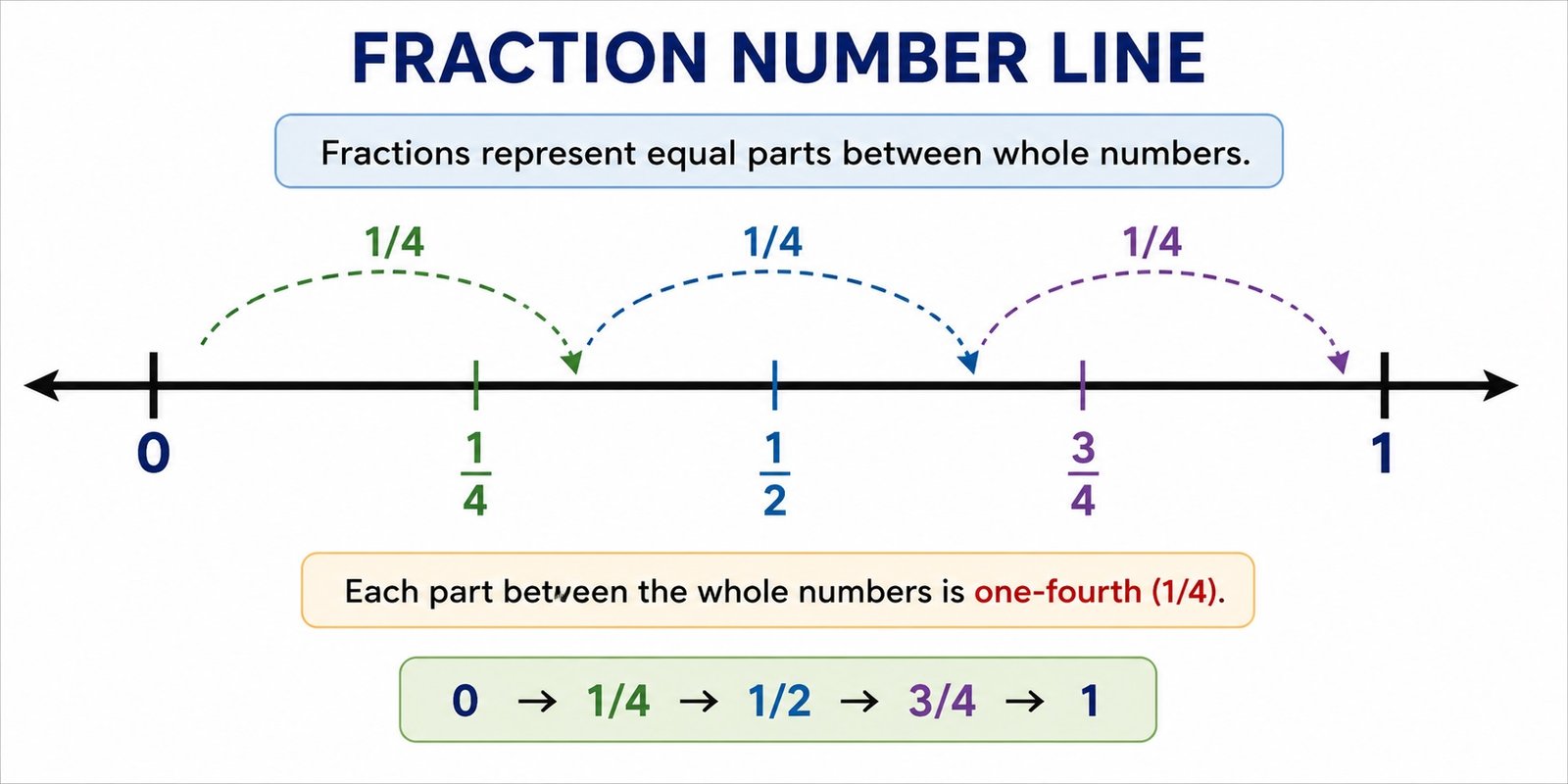
Common Fraction, Decimal & Percent Conversion Chart
This chart shows the most common fractions with their decimal and percentage equivalents. Use it as a quick reference for math homework, engineering, construction, woodworking, measurement, cooking, and everyday calculations.| Fraction | Decimal | Percent |
| 1/10 | 0.1 | 10% |
| 1/8 | 0.125 | 12.50% |
| 1/6 | 0.1667 | 16.67% |
| 1/5 | 0.2 | 20% |
| 1/4 | 0.25 | 25% |
| 1/3 | 0.3333… | 33.33% |
| 3/8 | 0.375 | 37.50% |
| 2/5 | 0.4 | 40% |
| 1/2 | 0.5 | 50% |
| 3/5 | 0.6 | 60% |
| 5/8 | 0.625 | 62.50% |
| 2/3 | 0.6667 | 66.67% |
| 3/4 | 0.75 | 75% |
| 4/5 | 0.8 | 80% |
| 5/6 | 0.8333… | 83.33% |
| 7/8 | 0.875 | 87.50% |
| 9/10 | 0.9 | 90% |
Frequently Asked Questions (FAQs)
1. What is a fraction calculator?
A fraction calculator is an online tool that performs fraction operations such as addition, subtraction, multiplication, division, simplification, and conversions between fractions, decimals, percentages, and mixed numbers. It provides accurate answers along with step-by-step calculations.
2. How do you add fractions with different denominators?
To add fractions with different denominators, find the least common denominator (LCD), convert each fraction into an equivalent fraction with the LCD, add the numerators, and simplify the result if possible.
3. How do you simplify a fraction?
Simplify a fraction by dividing both the numerator and denominator by their greatest common divisor (GCD). Continue dividing until no larger common factor exists, leaving the fraction in its lowest terms.
4. How do you multiply fractions?
Multiply fractions by multiplying the numerators together and multiplying the denominators together. Afterward, simplify the resulting fraction if necessary.
5. How do you divide fractions?
Divide fractions by multiplying the first fraction by the reciprocal of the second fraction. Then simplify the answer to obtain the final result.
6. What is an equivalent fraction?
Equivalent fractions represent the same value even though they have different numerators and denominators. They are created by multiplying or dividing both the numerator and denominator by the same non-zero number.
7. How do you convert a mixed number to an improper fraction?
Multiply the whole number by the denominator, add the numerator, and place the result over the original denominator. For example, 2 3/4 becomes (2 × 4 + 3)/4 = 11/4.
8. How do you convert an improper fraction to a mixed number?
Divide the numerator by the denominator. The quotient becomes the whole number, the remainder becomes the numerator, and the denominator remains the same.
9. How do you convert a fraction to a decimal?
Convert a fraction to a decimal by dividing the numerator by the denominator. For example, 3/8 = 3 ÷ 8 = 0.375.
10. How do you convert a decimal to a fraction?
Write the decimal as a fraction over a power of 10, then simplify by dividing the numerator and denominator by their greatest common divisor. For example, 0.75 = 75/100 = 3/4.
11. How do you convert a percent to a fraction?
Write the percentage over 100 and simplify the fraction. For example, 40% = 40/100 = 2/5. If the percentage contains decimals, first remove the decimal before simplifying.
12. What is the difference between proper, improper, and mixed fractions?
A proper fraction has a numerator smaller than its denominator, an improper fraction has a numerator greater than or equal to its denominator, and a mixed number combines a whole number with a proper fraction.
References
-
OpenStax – Prealgebra 2e: Introduction to Fractions
Comprehensive coverage of fractions, mixed numbers, equivalent fractions, simplifying, addition, subtraction, multiplication, division, and fraction applications. -
OpenStax – Visualize Fractions
Explains proper fractions, improper fractions, mixed numbers, equivalent fractions, number lines, and fraction comparisons. -
NRICH Mathematics (University of Cambridge)
Extensive educational resources covering fractions, decimals, percentages, ratios, equivalent fractions, and mathematical problem solving. -
NRICH – Fractions, Decimals, Percentages, Ratio & Proportion
Activities and explanations related to fraction operations, decimal conversion, percentages, and proportional reasoning. -
National Science Foundation (NSF) – Mathematics Educational Resources
Educational mathematics resources supporting number operations, fractions, decimals, percentages, and mathematical reasoning. -
OpenStax – Prealgebra: Introduction to Fractions
Reference material covering fraction arithmetic, mixed numbers, simplifying fractions, and fraction operations. -
NRICH Primary Curriculum – Fractions, Decimals and Percentages
Curriculum-aligned guidance on converting fractions, decimals, and percentages, simplifying fractions, and understanding equivalent fractions.