Juice Calorie Calculator for Fruits, Vegetables, Herbs & Flowers
Juice Calorie Calculator
How to use our Juice Calorie Calculator
1. Select the Juice Type
- Click the dropdown menu labeled “Select Type of Juice”
- Choose from different types:
- 🥕 Vegetable (carrot, tomato, beetroot, etc.)
- 🍊 Fruit (orange, apple, pineapple, etc.)
- 🌿 Herbs & Leaves (aloe vera, mint, etc.)
- 🌸 Flower & Other Plants (hibiscus, rose petal, etc.)
- 🥤 Others (coconut water, almond milk, etc.)
2. Select & Search
- After selecting, a searchable list appears.
- Type in the “Search…” box to filter options.
- Click on your juice from the list (e.g., “Orange, Apple, etc”).
3. Choose the Serving Size
- Select from:
- Half cup – 120ml (4 fl oz)
- 1 cup – 240ml (8 fl oz)
- Custom amount (enter any amount in milliliters)
4. Enter Added Sugar (if any)
- By default, sugar is set to 0(zero) g.
- If your juice has added sugar, enter the amount in grams.
(Example: 10g sugar = 40 extra calories)
5. Click “Calculate Calories”
How is Calculation performed for Juice Calculator
Example Calculation
🔹 Name: Orange Juice(45 cal/100ml)
🔹 Size: 240ml
🔹 Added Sugar: 5g
Calculation:
- Juice calories = (45 × 240) / 100 = 108 cal
- Sugar calories = 5g × 4 cal/g = 20 cal
- TOTAL = 128 calories
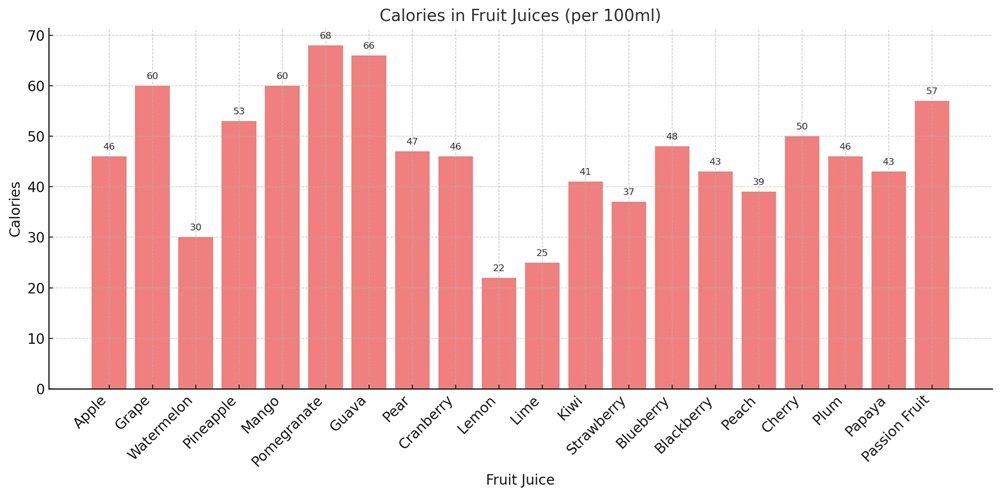
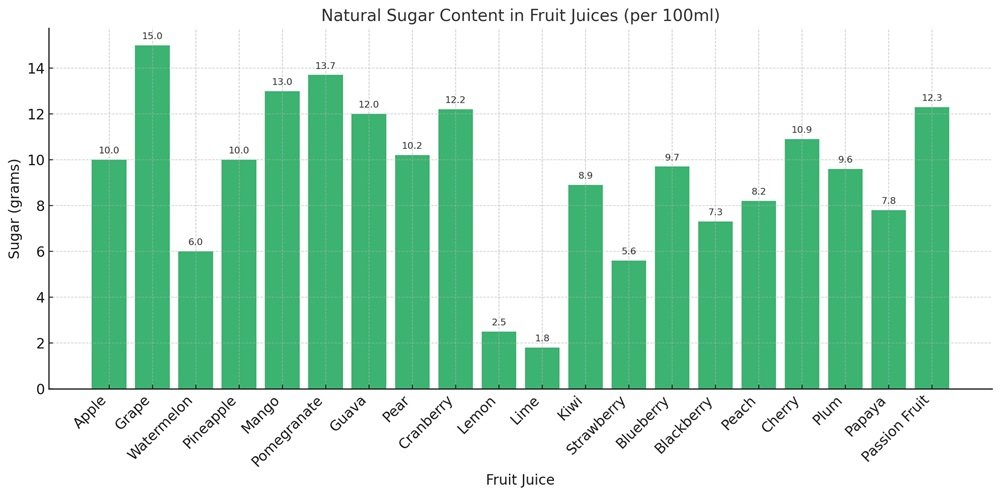
Fruit Juice Calories Chart
| Name | Calories per 100ml |
| Apple | 46 |
| Grape | 60 |
| Watermelon | 30 |
| Pineapple | 53 |
| Mango | 60 |
| Pomegranate | 68 |
| Guava | 66 |
| Pear | 47 |
| Cranberry | 46 |
| Lemon | 22 |
| Lime | 25 |
| Kiwi | 41 |
| Strawberry | 37 |
| Blueberry | 48 |
| Blackberry | 43 |
| Peach | 39 |
| Cherry | 50 |
| Plum | 46 |
| Papaya | 43 |
| Passion Fruit | 57 |
| Tamarind | 62 |
| Lychee | 66 |
| Nanana | 89 |
| Apricot | 48 |
| Fig | 40 |
| Cantaloupe | 34 |
| Soursop | 66 |
| Jackfruit | 64 |
| Dragon Fruit | 40 |
| Bael | 90 |
| Jamun (Black Plum) | 50 |
| Mulberry | 43 |
| Sapodilla (Chickoo) | 83 |
| Ber (Jujube) | 66 |
| Acai Berry | 70 |
| Camu Camu | 25 |
| Acerola Cherry | 32 |
| Durian | 80 |
| Mangosteen | 60 |
| Rambutan | 68 |
| Longan | 60 |
| Salak (Snake Fruit) | 65 |
| Marula Fruit | 72 |
| Baobab Fruit | 45 |
| African Star Apple | 50 |
| Cupuaçu | 56 |
| Lacuma | 40 |
| Nance Fruit | 52 |
| Rose Apple | 48 |
| Pulasan | 62 |
| Langsat | 55 |
| Monstera Deliciosa | 60 |
| Indian Hog Plum | 44 |
| Loquat | 47 |
Vegetable Juice Calories Chart
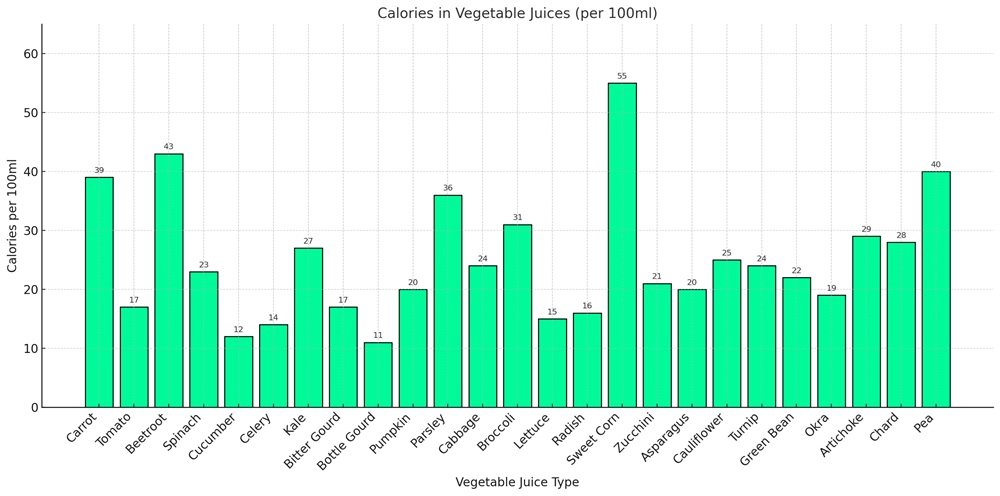
| Name | Calories per 100ml |
| Carrot | 39 |
| Tomato | 17 |
| Beetroot | 43 |
| Spinach | 23 |
| Cucumber | 12 |
| Celery | 14 |
| Kale | 27 |
| Bitter Gourd (Karela) | 17 |
| Bottle Gourd (Lauki) | 11 |
| Pumpkin | 20 |
| Parsley | 36 |
| Cabbage | 24 |
| Broccoli | 31 |
| lettuce | 15 |
| Radish | 16 |
| Sweet Corn | 55 |
| Zucchini | 21 |
| Asparagus | 20 |
| Cauliflower | 25 |
| turnip | 24 |
| Green Bean | 22 |
| Okra (Ladyfinger) | 19 |
| Artichoke | 29 |
| Chard | 28 |
| Pea | 40 |
| Onion | 41 |
| Garlic | 45 |
| Turmeric | 49 |
| Leek | 31 |
| Taro Leaf | 40 |
| Drumstick (Moringa) Leaf | 35 |
| Amaranth Leaf | 30 |
| Mustard Green | 28 |
| Fenugreek (Methi) Leaf | 27 |
| Nopal (Prickly Pear Cactus) | 20 |
| Dandelion Greens | 25 |
| Seaweed | 19 |
| Yacon Root | 36 |
| Cassava Leaf | 38 |
| Tinda (Indian Round Gourd) | 22 |
| Turai (Ridge Gourd) | 18 |
| Kohlrabi (Knol-Khol) | 29 |
| Fiddlehead Fern | 32 |
| Pumpkin Leaf | 33 |
| Chaya Leaf | 34 |
| Ugu (Fluted Pumpkin) | 31 |
| Water Spinach (Kangkong) | 28 |
| Snake Gourd | 24 |
| Kundru (Ivy Gourd) | 26 |
Herbs & leaves Juice Chart
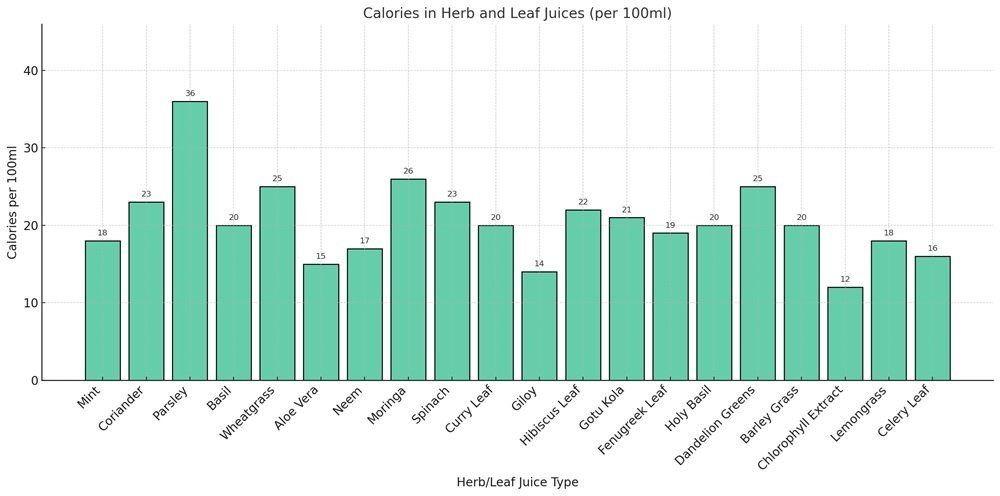
| Name | Calories per 100ml |
| Mint | 18 |
| Coriander (Cilantro) | 23 |
| Parsley | 36 |
| Basil (Tulsi) | 20 |
| Wheatgrass | 25 |
| Aloe Vera | 15 |
| Neem | 17 |
| Moringa (Drumstick Leaf) | 26 |
| Spinach | 23 |
| Curry Leaf | 20 |
| Giloy (Guduchi) | 14 |
| Hibiscus Leaf | 22 |
| Gotu Kola (Centella) | 21 |
| Fenugreek Leaf | 19 |
| Holy Basil | 20 |
| Dandelion Greens | 25 |
| Barley Grass | 20 |
| Chlorophyll Extract | 12 |
| Lemongrass | 18 |
| Celery Leaf | 16 |
Flowers Juice Chart
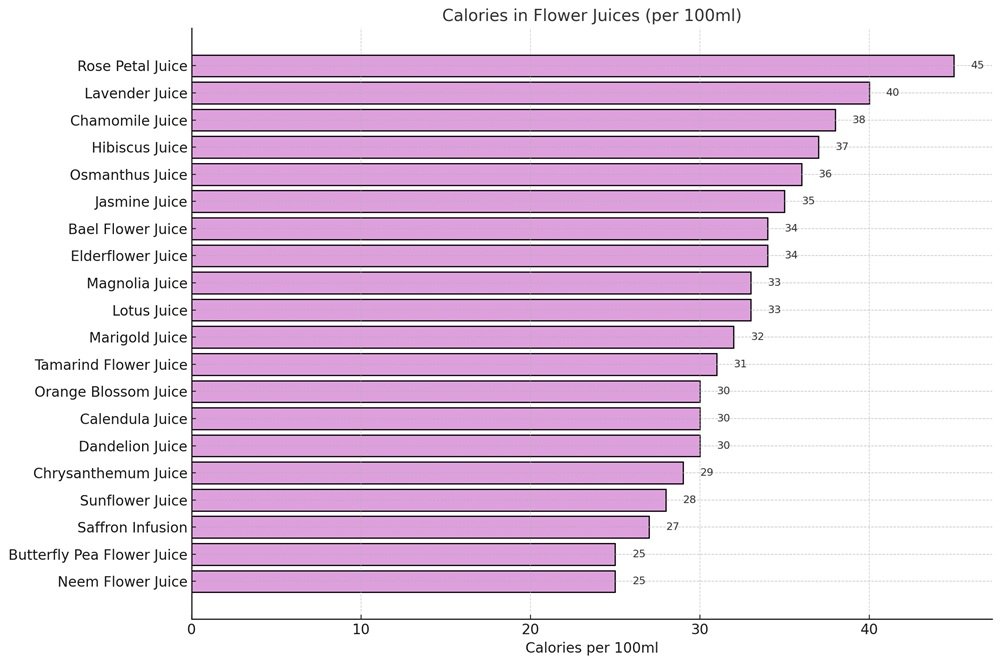
| Name | Calories per 100ml |
| Hibiscus | 37 |
| Rose Petal | 45 |
| Lavender | 40 |
| Chamomile | 38 |
| Jasmine | 35 |
| Marigold | 32 |
| Butterfly Pea Flower | 25 |
| Dandelion | 30 |
| Lotus | 33 |
| Sunflower | 28 |
| Calendula | 30 |
| Osmanthus | 36 |
| Elderflower | 34 |
| Chrysanthemum | 29 |
| Tamarind Flower | 31 |
| Magnolia | 33 |
| Saffron Infusion | 27 |
| Orange Blossom | 30 |
| Bael Flower | 34 |
| Neem Flower | 25 |
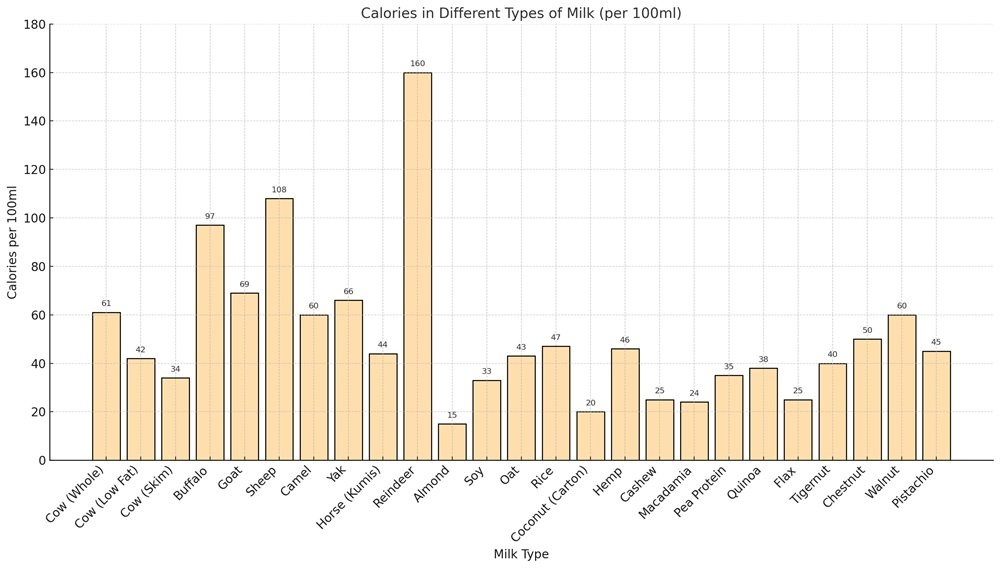
Milk Calorie Chart
| Milk | Calories per 100ml |
| Cow Milk (Whole) | 61 |
| Cow Milk (Low Fat) | 42 |
| Cow Milk (Skim) | 34 |
| Buffalo Milk | 97 |
| Goat Milk | 69 |
| Sheep Milk | 108 |
| Camel Milk | 60 |
| Yak Milk | 66 |
| Horse Milk (Kumis) | 44 |
| Reindeer Milk | 160 |
| Almind Milk (Unsweetened) | 15 |
| Soy Milk (Unsweetened) | 33 |
| Oat Milk (Unsweetened) | 43 |
| {name:”Rice Milk | 47 |
| Coconut Milk (Carton) | 20 |
| Hemp Milk | 46 |
| Cashew Milk | 25 |
| Macadamia Milk | 24 |
| Pea Protein Milk | 35 |
| Quinoa Milk | 38 |
| Flax Milk | 25 |
| Tigernut Milk | 40 |
| Chestnut Milk | 50 |
| Walnut Milk | 60 |
| Pistachio Milk | 45 |
Water Calorie Chart
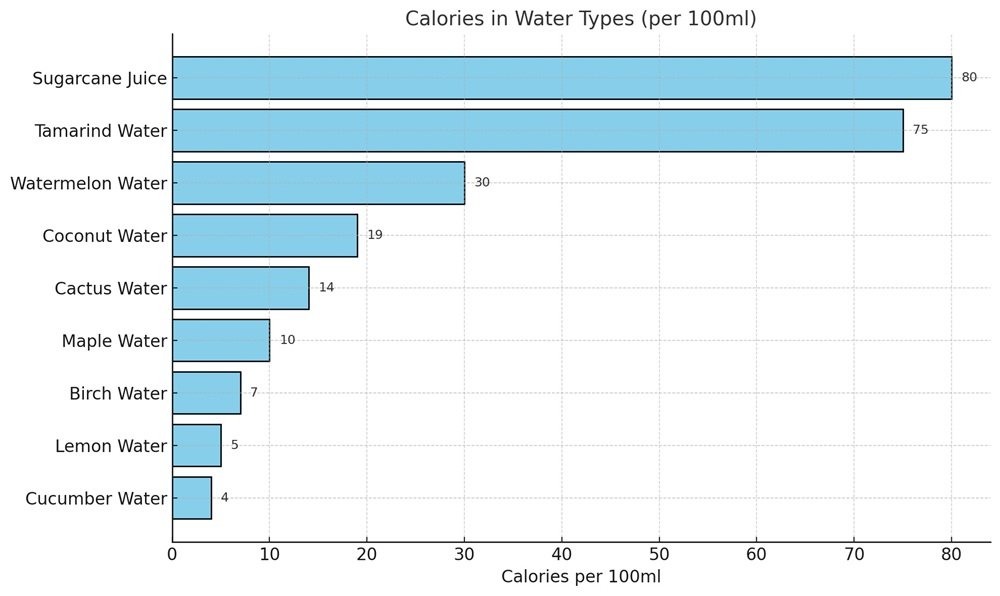
| Water | Calories per 100ml |
| Coconut Water | 19 |
| Cactus Water | 14 |
| Maple Water | 10 |
| Birch Water | 7 |
| Watermelon Water | 30 |
| Sugarcane | 80 |
| Cucumber Water | 4 |
| Lemon Water | 5 |
| Tamarind Water | 75 |
What are the best juices for weight loss
Here are the best low-calorie juices for weight loss, chosen for their low sugar, high water content, and natural nutrients that support fat metabolism, hydration, and digestion:
| Name | Calories (per 100ml) | Key Benefits |
| Cucumber | 2-5 kcal | Detoxifying, hydrating, low in sugar |
| Celery | 6-8 kcal | Anti-inflammatory, promotes satiety |
| Spinach | 20 kcal | Rich in iron, fiber, and antioxidants |
| Tomato | 17 kcal | Boosts metabolism, rich in lycopene |
| Lemon Water | 3-6 kcal | Boosts digestion, alkalizing effect |
| Watermelon | 30 kcal | Hydrating, contains L-citrulline (fat burner) |
| Carrot | 39 kcal | Fills you up, beta-carotene rich |
| Bitter Gourd | 17-20 kcal | Regulates blood sugar, aids fat burning |
| Green Apple | 46 kcal | Low sugar, fiber-rich |
| Beetroot | 43 kcal | Boosts stamina, supports detoxification |
Why sugar is added to juices
Sugar is often added to enhance flavor, extend shelf life, and improve texture. Many fruit juices lose their natural sweetness during processing, especially when diluted or stored for long periods. Added sugar helps maintain a consistent taste, but it also increases calorie content and reduces the juice’s health benefits.
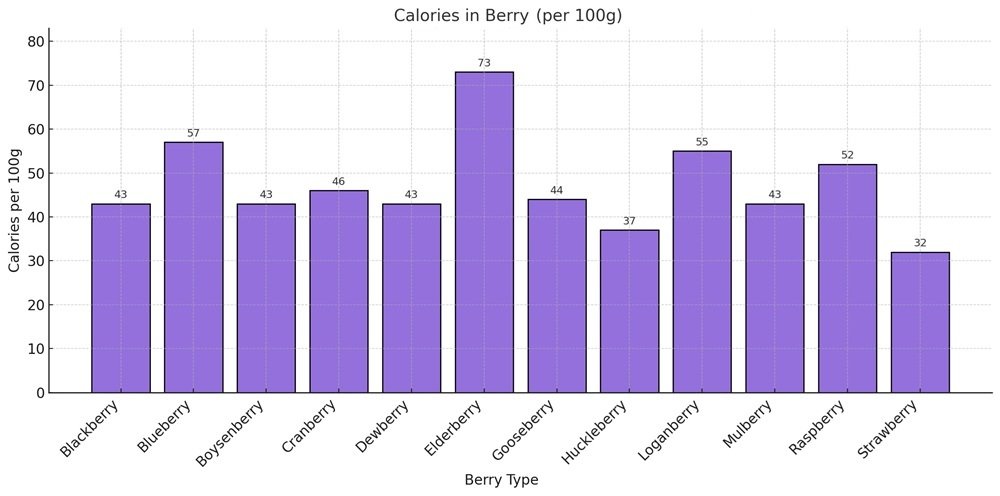
Which Berries Are Lowest in Calories?
Berry (per 100g)
- Strawberries 32 kcal
- Raspberries 52 kcal
- Blackberries 43 kcal
- Blueberries 57 kcal
Which Type of Milk Has the Least Calories: Almond, Oat, or Soy?
- Almond Milk (unsweetened) 30-40 kcal
- Soy Milk (unsweetened) 80-90 kcal
- Oat Milk (unsweetened) 120-130 kcal
Almond milk is the lowest-calorie option, making it ideal for weight loss.
Does Flavored Water Have More Calories Than Plain Mineral Water?
- Plain Mineral Water: 0 kcal
- Flavored Water (unsweetened): 0-10 kcal
- Flavored Water (sweetened): 50-100 kcal
Always check labels for added sugars.
What Is Magic Juice?
“Magic Juice” refers to a weight-loss detox drink, often containing:
- Apple cider vinegar
- Lemon
- Ginger
- Cayenne pepper
- Calories: ~30-50 kcal per serving
It boosts metabolism but isn’t a long-term solution.
Frequently Asked Questions (FAQs)
1. How many calories are in fresh fruit juice?
The calories in fresh fruit juice depend on the type of fruit and the serving size. For example, apple, orange, mango, and grape juices generally contain more natural sugars and calories than lemon or watermelon juice. Use our Juice Calorie Calculator to estimate the calories in your favorite juice instantly.
2. Which fruit juice has the lowest calories?
Lemon juice, watermelon juice, cucumber juice, and tomato juice are among the lowest-calorie juice options. They provide hydration and nutrients while containing fewer calories than sweeter fruit juices.
3. Which vegetable juice is best for weight loss?
Vegetable juices made from cucumber, celery, spinach, kale, tomato, and lettuce are excellent low-calorie choices for weight loss. They are rich in vitamins, minerals, and fiber while containing fewer calories than most fruit juices.
4. How does the Juice Calorie Calculator work?
The Juice Calorie Calculator estimates calories based on the selected fruit, vegetable, herb, or flower juice and the serving size. It uses standard nutritional data to provide a quick and reliable calorie estimate for homemade and fresh juices.
5. Are homemade juices healthier than store-bought juices?
Homemade juices are often healthier because they usually contain no added sugars, preservatives, or artificial ingredients. Freshly prepared juices also retain more natural vitamins and antioxidants when consumed soon after preparation.
6. Can herbs and flower juices contain calories?
Yes. Although herb and flower juices generally contain very few calories, they still provide small amounts of carbohydrates and beneficial plant compounds. Popular examples include mint, basil, hibiscus, rose, and lavender juices.
7. Which juice has the highest calories?
Juices made from grapes, mangoes, pomegranates, bananas, and sugarcane are among the highest in calories because they naturally contain more sugars. Portion size also plays a significant role in total calorie intake.
8. Can drinking juice help with weight loss?
Fresh juice can be part of a balanced weight-loss diet when consumed in moderation. Choosing low-calorie vegetable juices and avoiding added sugar can help reduce calorie intake while providing essential nutrients.
9. Does serving size affect the calories in juice?
Yes. The larger the serving, the more calories you consume. A 16-ounce glass of juice contains approximately twice the calories of an 8-ounce serving if made from the same ingredients.
10. Why should I use a Juice Calorie Calculator?
A Juice Calorie Calculator helps you compare calories across fruits, vegetables, herbs, and flower juices. It is useful for meal planning, calorie tracking, healthy eating, weight management, and choosing lower-calorie beverages with confidence.
References
- U.S. Department of Agriculture (USDA), Agricultural Research Service. FoodData Central. Available at: https://fdc.nal.usda.gov/ . Accessed July 2026.
- National Agricultural Library (USDA). Nutrition Tools and Curricula. Available at: https://www.nal.usda.gov/human-nutrition-and-food-safety/nutrition-tools-and-curricula . Accessed July 2026.
- Harvard T.H. Chan School of Public Health. The Nutrition Source – Healthy Drinks. Available at: https://nutritionsource.hsph.harvard.edu/healthy-drinks/ . Accessed July 2026.
- Mayo Clinic. Juicing: What Are the Health Benefits? Available at: https://www.mayoclinic.org/healthy-lifestyle/nutrition-and-healthy-eating/expert-answers/juicing/faq-20058020 . Accessed July 2026.